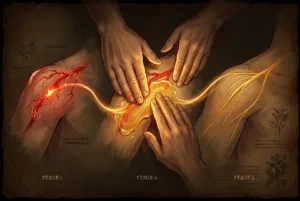
If you’re reading this, you probably already know what nerve pain feels like, and you know it doesn’t respond like a sore muscle or a sprained ankle. The burning, the tingling, the sensations that flare without warning. Standard OTC pain relievers barely touch it. So when you hear that a CBD balm might help, it’s a reasonable thing to be curious about.
This article gives you a straight answer, not a sales pitch. We’ll cover what the research actually says and then get specific about how to use it correctly, because application matters more than most people realize.
What Makes Nerve Pain Different
Nerve pain (neuropathic pain) doesn’t originate in tissue the way muscle soreness or inflammation does. It comes from damaged or misfiring nerves sending signals that don’t accurately reflect what’s happening in surrounding tissue.
That’s why conditions like peripheral neuropathy, sciatica, or post-herpetic neuralgia feel so distinct, and why ibuprofen or acetaminophen often provides little relief.
This matters for the CBD conversation because it explains why people managing chronic pain from nerve-related conditions look beyond conventional options, and why topical application has a specific logic for nerve pain near the surface of the skin.
How CBD Balm Works
When you apply a CBD balm or CBD cream to your skin, it interacts with cannabinoid receptors in the skin and underlying tissue. It doesn’t enter the bloodstream in any meaningful amount and doesn’t produce psychoactive effects. It works locally, which is both its strength and its limitation.
For surface-level nerve pain, including neuropathy in the hands and feet or post-herpetic neuralgia along a nerve line, the topical mechanism makes genuine physiological sense. The receptors it needs to reach are accessible. For deep nerve pain, such as sciatica originating at the spine, a topical product is unlikely to reach the source, though it may still provide some surface-level comfort.
Does CBD Balm Actually Help Nerve Pain?
The honest answer is: the research is promising but not conclusive.
A 2020 randomized controlled trial published in Pain Medicine found that topical CBD was associated with significant reductions in intense pain, sharp pain, and cold and itchy sensations in patients with peripheral neuropathy, with no side effects reported. Other studies show CBD’s potential anti-inflammatory properties, though most human trials are still relatively small, and the FDA has not approved any topical CBD product for pain treatment.
What that means for you: CBD balm is not a proven treatment for nerve pain. But the mechanism is plausible for surface-level nerve pain, the risk profile is low, and many people managing chronic pain report meaningful relief. That’s an honest picture, and if you’ve been sold miracle cures before, you deserve one.
READ: CBN vs CBD vs CBG: What Each One Does and When to Use It
How to Use CBD Balm for Nerve Pain
Most articles on this topic give vague instructions like “apply to the affected area.” Here’s what actually matters.
- Warm it first. CBD balm absorbs better when warm. Scoop a small amount into your palms and rub them together for 15 to 20 seconds before applying. It will shift from waxy to more fluid and skin-ready.
- Use enough product. A thin smear isn’t enough. For hands or feet, think a nickel- to quarter-sized amount per area. The CBD topical cream for pain needs real contact with the skin to interact with receptors beneath it.
- Massage it in. Use slow, circular motions rather than just spreading it on the surface. Spend two to three minutes per area. This improves absorption and helps the product reach the tissue layers where cannabinoid receptors are concentrated.
- Expect a delayed onset. Most people notice effects between 15 and 45 minutes after application. If you apply it and feel nothing after 10 minutes, don’t assume it doesn’t work.
- Apply consistently. People who use CBD topical cream for nerve pain regularly report better results with scheduled application, such as morning and evening, rather than only during flares. Treat it as maintenance, not just rescue.
- Give it time. Use it consistently for one to two weeks before deciding it doesn’t work. If a lower-potency product doesn’t seem to be helping, try a higher concentration before deciding it isn’t for you.
Choosing the Right CBD Balm
Not all CBD balms are created equal, and the difference between a product that works and one that doesn’t often comes down to a few key factors.
Here’s what to look for before you spend money on one.
- Concentration: mg per oz matters more than total mg. A 1,000mg balm in a 4 oz jar is 250mg per oz. A 500mg balm in a 1 oz tin is 500mg per oz. For nerve pain, aim for at least 250 to 500mg per oz. Don’t buy based on the headline number.
- Full-spectrum vs. broad-spectrum vs. isolate. Full-spectrum contains all naturally occurring cannabinoids, including trace THC (under 0.3%). Many researchers believe cannabinoids work better together, often called the “entourage effect.” For nerve pain, full-spectrum or broad-spectrum products are generally considered more promising than isolate.
- Complementary ingredients. Menthol, arnica, and camphor are common additions with their own evidence bases for topical pain relief. They’re not gimmicks and may enhance the overall effect.
- Third-party lab testing. Any reputable product should have a Certificate of Analysis (COA) from an independent lab confirming CBD content, THC level, and the absence of pesticides and heavy metals. If there’s no COA available, don’t buy it.
- Buy from a licensed retailer. Buying from a licensed California retailer like NorCal Holistics means the products meet California’s regulatory standards for safety, labeling, and potency accuracy. That accountability simply doesn’t exist with unlicensed online purchases.
Conclusion
CBD balm isn’t a miracle cure for nerve pain. What it is: a topical product with a plausible mechanism, an encouraging research base, and a low-risk profile that makes it worth trying if you haven’t. The more important variable is choosing a quality product and using it correctly, which is exactly what this article has equipped you to do.
Browse CBD balm and topical products available for delivery through NorCal Holistics, Sacramento’s licensed cannabis delivery service.
Frequently Asked Questions
Will it get me high?
No. Topical CBD doesn’t enter the bloodstream and doesn’t reach the brain. Even full-spectrum topicals with trace THC won’t produce psychoactive effects when applied to the skin.
How long until it works?
Expect 15 to 45 minutes. Give it the full onset window before evaluating.
Can I use it with my current medication?
Topical CBD’s minimal systemic absorption makes interactions unlikely, but mention it to your prescribing doctor if you’re on anticonvulsants like gabapentin or pregabalin.
CBD balm or CBD oil for nerve pain?
Different tools for different situations. Balm is best for localized, surface-level nerve pain. Oral CBD oil works systemically and may be more relevant for widespread or internal nerve pain. Some people use both.
Is it legal in California?
Yes. Hemp-derived CBD products under 0.3% THC are federally legal, and California’s licensed cannabis market includes topical CBD. Legal for adults 21 and over, or 18+ with a valid medical recommendation.